The First Frost
What Changes Overnight in the Vineyards and Woods and What it Signals…
There is a silence to the first frost that is unlike any other. It’s not the hush of snowfall or the stillness of a summer night, but a brittle, crystalline quiet that settles over the land like a whispered warning. In the vineyard and woods, this sudden shift is both subtle and profound. Though the sun may rise the same, and the hills may still roll out their morning mist, everything beneath that silver film has changed. To those who tend the land—farmers, vintners, hunters, and foragers—this moment is neither surprise nor mystery. It is a long-awaited signpost, a natural herald that the season has turned, and with it, the rhythm of the earth.
The Vineyard: A Final Breath Before Slumber
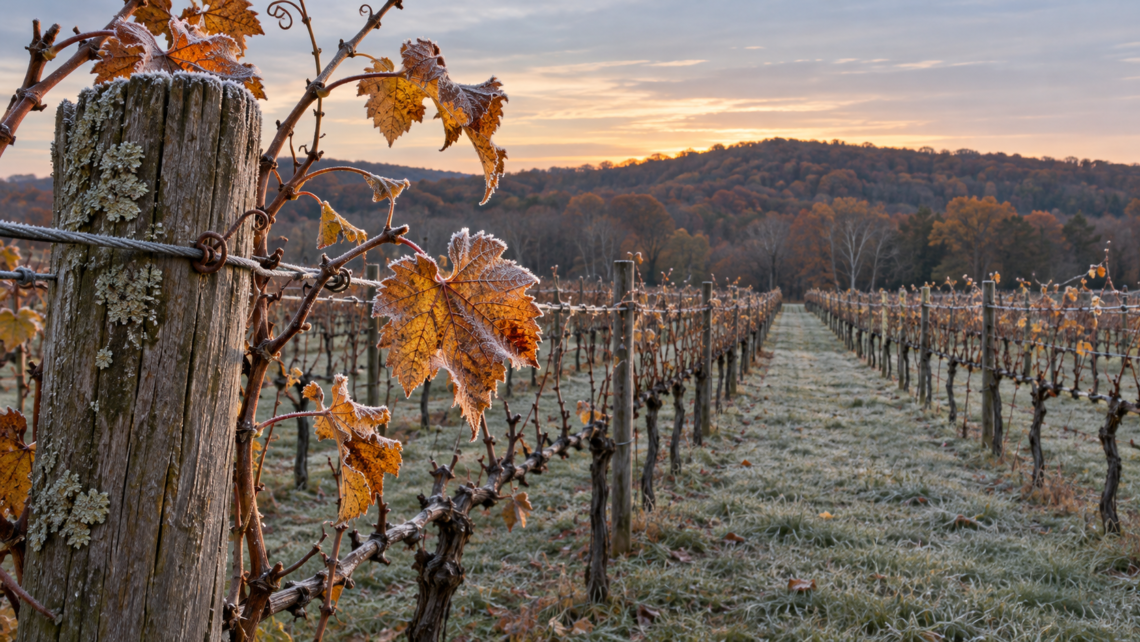
In the vineyard, the first frost marks the end of one cycle and the slow descent into dormancy. By the time this icy threshold arrives, the harvest baskets have long been filled and cellars stocked with this year’s vintage. The leaves, once bright with chlorophyll, now hang like fading banners in burnt umber and gold. The frost hastens their fall, severing the last connection between root and sun. The vines themselves respond quietly. Beneath the surface, energy that once pushed sap into fruit now retreats inward, stored deep in the roots for the long sleep ahead.
Generations of vintners have watched this moment with reverence. The old-timers, leaning on fence posts or sipping the season’s new wine, would nod toward a frost-covered vineyard and say, “She’s tucking herself in.” Their fathers and grandfathers said the same. They knew not to prune too soon, not to disturb the vines in their shift from life to rest. They read the frost not just as a forecast but as instruction—guiding when to finish repairs, when to mulch, when to let go.
The Woods: A Stirring of the Wild
In the forest, the first frost changes the script entirely. Leaves that once clung stubbornly to their branches surrender en masse, carpeting the ground in a dry, rustling hush. The scent in the air sharpens—no longer the sweet rot of summer decay but something cleaner, like split wood and distant smoke. Animals shift their behavior. Squirrels become frantic with gathering, deer move with heavier caution, and foxes begin to roam with more purpose. The frost triggers instinct as much as it does action.
Rural families who have lived along the woods’ edge for generations know this cycle well. Grandparents once taught children to judge the frost not just by temperature, but by how it laid itself across different terrains. A hoarfrost on the open field but not yet under the trees? A warning shot. Frost low and thick along the creek beds? The ground is changing. The old saying goes, “If the frost stays past sunrise, the ground will soon remember it.” And so it does.
A Pause Called Indian Summer
Sometimes, after the first killing frost, the land seems to hold its breath. A week or more of surprising warmth may return—days of golden sunlight, gentle breezes, and shirtsleeves at midday. This is what is properly called Indian Summer: a warm spell that arrives after a hard frost, before winter sets in for good. It is not just late autumn warmth, but a distinct lull in the march toward winter. Traditionally, Native American tribes and early settlers recognized it as a time for one last hunt, one last harvest, or to complete preparations before true cold arrived. Today, we see it as a welcome reprieve, though the sharp memory of frost beneath our boots reminds us it won’t last. Those who live close to the land trust the signs—they don’t unpack the wool blankets or drain the hoses just yet, but neither do they forget the frost that’s already come.
What the Frost Signals
To the attentive, the first frost signals more than cold. It signals time to cull the last of the garden—dig up the final beets and carrots, gather the herbs now sharp with cold-concentrated oil. It signals the woodpile should be finished and tarped, the root cellar double-checked, the final load of firewood hauled in before the muddy ruts of November set in.
It is also a cultural milestone. In many rural homes, it meant time for the hog to be slaughtered. It meant potpourri of clove and orange on the stove, the shifting of quilts from cedar chests to bedposts, and the first ladles of stew thickened with everything too tired or frost-bitten to keep. It marked the moment when families shifted from the outward work of field and forest to the inward pace of hearth and home.
A Knowledge Passed Down
None of this was written down in manuals, at least not at first. It was observed in the bend of a branch, the crunch of the earth beneath boot soles, the way breath steamed before a chore was finished. This knowledge passed through stories at the supper table, from mother to daughter, from grandfather to grandson. It was taught in the pauses—when a hand would rest on a shoulder and point toward the white tips of grass, saying nothing more than, “It’s here.”
Even today, when satellite forecasts and smartphone apps can pinpoint temperature shifts to the hour, the first frost remains a thing to be seen—to be walked through, smelled, and felt. There is no substitute for the moment your boots break the crust of a frost-covered field or your breath curls like smoke in front of you while the vineyard stands still, each post rimmed in ice like lace.
The first frost reminds us that we are not apart from the land but part of its breathing. It tells us, in no uncertain terms, to slow down, prepare, and take stock. And as it has for generations, it speaks softly—but clearly enough to those who know how to listen.