A Test of Patience and Perception
The First Year of a Vineyard
To the untrained eye, a vineyard one year after planting may not look like much.
The land remains mostly open. The vines are small, their shoots tentative, and the grand vision that inspired their planting is still largely invisible. Anyone passing by might wonder whether much has happened at all.
But to those who planted it, every row tells a story of survival, adjustment, and quiet progress.
A vineyard’s first year is not about abundance. It is about establishment. The slender, bare-root vines that went into the ground have spent much of their first growing season doing their most important work out of sight, developing the roots that will sustain them for years to come.
It All Began in April 2001
There was a single weekend when everything began at once. In April 2001…
Clyde took the tractor into the field with an auger attached and began drilling holes, one after another, in steady succession. The sound of the tractor carried across the property as months of planning finally became something tangible.
Each hole marked the place where a vine would grow. Each one represented a decision about the vineyard we hoped to create.
I followed with the vines.
They arrived bare-root, bundled together, and decidedly unimpressive. I soaked them in water to rehydrate their roots, then carried them into the field, placing one into each freshly drilled hole as Clyde worked his way down the rows.
It was simple work, repeated over and over. But there was something satisfying about watching those bare patches of earth gradually become the beginnings of a vineyard.
My mother, sixty-five years old at the time, took on the job that made everything else possible.
She connected garden hoses end to end, stretching them from the outdoor spigot all the way to the vineyard. It seemed an improbable distance for a collection of ordinary garden hoses, but somehow they reached.
Then she watered every vine, one by one, settling the soil around the roots and giving each new planting its first drink in its permanent home.
Then there was Rudy…
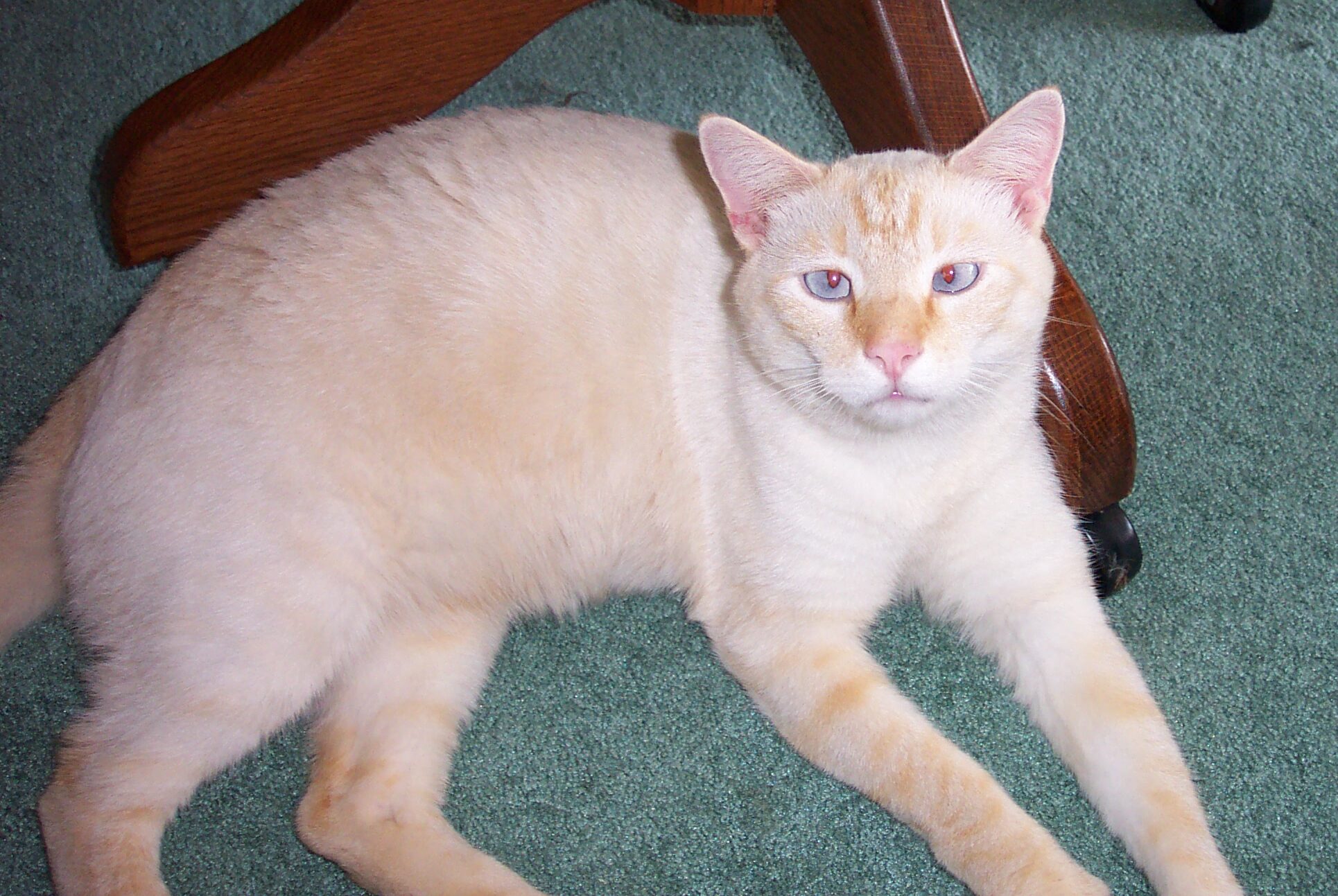
Our flamepoint Siamese cat had apparently decided that planting a vineyard required supervision.
He followed us into the field and appointed himself inspector of the entire operation. At each freshly drilled hole, Rudy stopped, peered down into it, and studied whatever he thought might be lurking below.
Only after a thorough examination would he move along to the next.
He seemed to take his responsibilities seriously, although we never quite determined what qualifications he possessed for the job.
When we stopped to rest, Rudy rested too.
When we resumed, so did he.
For that entire weekend, we had a four-member vineyard crew: Clyde drilling, me planting, my mother watering, and Rudy making certain that no hole escaped inspection.
By the time we finished, the field had changed—but not in any particularly impressive way.
There were no leafy vines, no clusters of grapes, and nothing that looked remotely like the vineyards pictured in wine-country brochures.
Just rows of disturbed earth, small planting stakes, and a great deal of hope.
We had planted a vineyard.
Now we had to wait for it to become one.
One Year Later
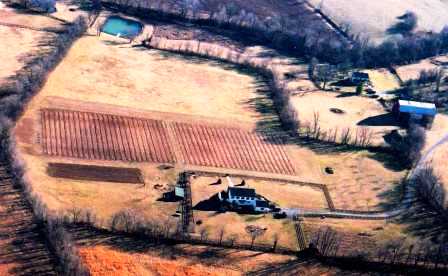
A year later, standing in that same field, we could begin to see what our planting weekend had set in motion.
The vines were alive. Most had produced shoots and leaves. Some were growing enthusiastically, while others seemed content to take their time.
From a distance, the vineyard still looked sparse. But up close, there were signs of progress everywhere.
The most important changes, however, were the ones we couldn’t see.
Beneath the soil, the vines had begun developing root systems that would eventually support their trunks, canopies, and fruit. Those roots were exploring their surroundings, growing into the soil in search of moisture and nutrients.
This was the real work of the first year.
A young grapevine cannot be expected to produce a meaningful crop while it is still struggling to establish itself. It must first develop the foundation that will allow it to grow, withstand stress, and eventually bear fruit.
The vineyard was investing in its future.
And so were we.
Every Vine Has Its Own Ideas
One of the first things we discovered was that grapevines do not necessarily grow according to our expectations.
We had planted them in orderly rows, at carefully measured intervals, using the same general methods.
Yet they did not all respond alike.
Some sent up vigorous shoots that seemed determined to reach the top of their stakes. Others produced modest growth and appeared in no particular hurry.
Even vines growing only a short distance apart could behave differently.
We began to understand that the vineyard was revealing things about the land that had not been obvious before.
A slight change in soil depth, a wetter patch of ground, or an area where the soil was more compacted could influence how well a young vine grew.
What had once appeared to be a relatively uniform field was becoming a collection of small, distinct growing environments.
And the vines were telling us about them.
We simply had to learn how to listen.
Learning to Read the Vineyard
Planting a vineyard is an act of optimism.
Managing one requires observation.
During that first year, our attention gradually shifted from the excitement of planting to the practical business of keeping young vines healthy.
We watched their growth, checked for signs of stress, and began recognizing differences among the rows.
We learned that a struggling vine was not necessarily a failed vine. Sometimes it simply needed more time. Sometimes it needed help. And sometimes the problem lay in the soil, moisture, weather, or competition from surrounding vegetation.
We also began to appreciate how much could happen to a vineyard between one visit and the next.
Weeds could grow with astonishing speed. Insects could appear seemingly overnight. Deer could discover tender shoots that had taken weeks to develop.
And the weather, of course, had its own plans.
A vineyard is exposed to whatever nature delivers. Too much rain, too little rain, unexpected cold, and summer heat all become part of its history.
The first year was our introduction to that reality.
We had chosen the location and planted the vines.
But we were not entirely in charge.
The Harvest That Would Have to Wait
One of the more difficult lessons in establishing a vineyard is learning not to expect grapes too soon.
The temptation is understandable. After all, grapes are the reason for planting a vineyard in the first place.
But young vines need to devote their energy to developing roots, shoots, and permanent structure.
Allowing them to carry a substantial crop too early can interfere with that development.
So the first year was not about harvesting fruit.
It was about preparing for the harvests we hoped would come later.
The reward for our work would not be measured in baskets of grapes or gallons of wine.
It would be measured in living vines, healthy growth, and the gradual establishment of a vineyard capable of producing for many years.
That required a different kind of patience.
More Than Rows of Vines
By the end of that first growing season, the vineyard had begun to acquire a personality of its own.
There were stronger vines and weaker ones, promising stretches of row and places that demanded more attention.
We could see where our efforts were paying off and where we still had things to learn.
The field no longer looked quite the way it had on planting weekend.
The orderly rows were becoming more apparent. Leaves and shoots had replaced bare planting sticks. The beginnings of a vineyard were finally visible.
But perhaps the greatest change was in how we saw it.
Before planting, we had looked across that field and imagined what it might become.
A year later, we were looking at something living—something that would respond to our care but would never be entirely under our control.
We were no longer simply planning a vineyard.
We were learning to live with one.
A Different Measure of Success
A year after planting, there were still more questions than answers.
Would the slower-growing vines catch up? Would the varieties we had chosen prove well suited to the site? Would the weather cooperate in the years ahead?
We couldn’t know.
But we could look down those rows and see that something important had happened.
The vines had survived their first growing season. They had begun putting down roots. They had responded to the soil, the weather, and the care we had given them.
The field was no longer just a place where we hoped grapes might someday grow.
It was becoming a vineyard.
And that was enough.
Because the first year of a vineyard is not measured by what it produces.
It is measured by what it establishes.
The roots are growing. The vines are finding their place. The vineyard is beginning to take shape.
And sometimes, standing among those young vines, I can still picture the weekend it all began.
Clyde on the tractor, drilling holes down the rows.
My mother, patiently watering each new planting through that improbable length of garden hose.
Me, carrying bundles of bare-root vines and placing them into the waiting earth.
And Rudy, our flamepoint Siamese, moving from hole to hole, peering into each one with the solemn concentration of a cat who had appointed himself vineyard inspector.
We thought we were planting grapevines.
We were really planting the beginnings of everything that Hiddencroft would become.