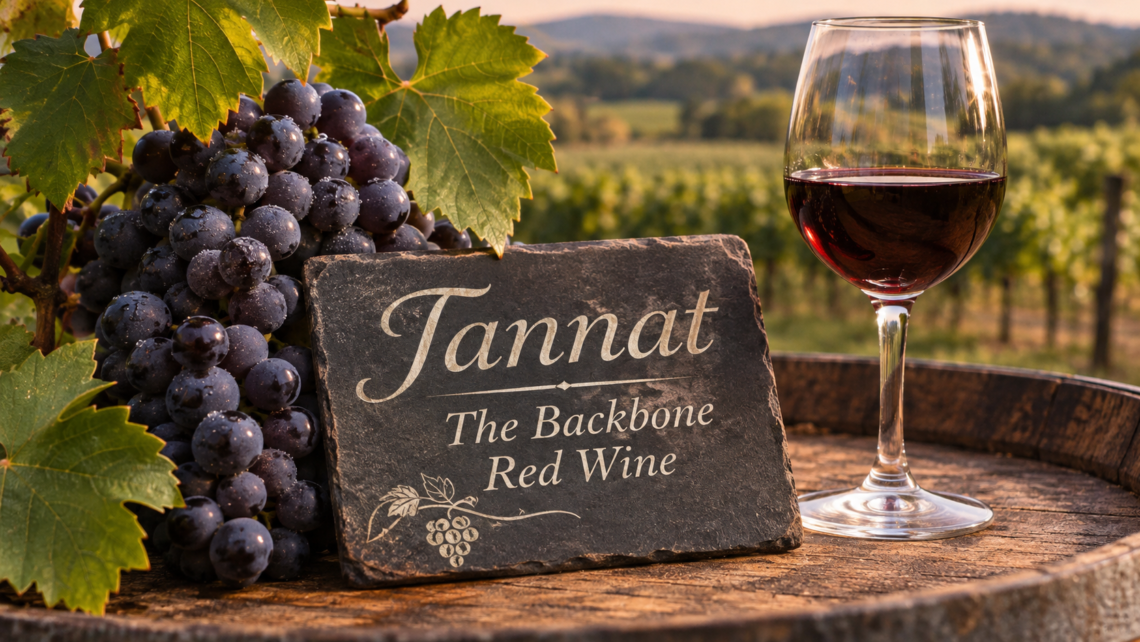
Tannat – The Backbone Red Wine
What Tannat Really Is…
Tannat is built differently.
Where Cabernet Franc speaks in nuance, Tannat speaks in structure. It is one of the most tannic red grapes in the world—dense, powerful, and unapologetically firm.
If Cabernet Franc is the conversation, Tannat is the foundation the house stands on.
Structure First, Everything Else Second
Tannat is defined by grip—its signature is tannin supported by dark fruit and depth.
Typical profile:
- Fruit: blackberry, black plum, black cherry
- Earthy: leather, cocoa, dark soil
- Spice: clove, black pepper
- Savory: tobacco, dried leaves
In well-made wines, the tannins are firm but integrated—not harsh or drying.
A Grape of Place and Persistence
Tannat thrives in specific environments and reflects them clearly.
- Southwest France (Madiran): powerful, rustic, age-worthy
- Uruguay: softer, more polished, fruit-forward
- Virginia: structured but increasingly refined with careful ripening
This is a grape that rewards patience—in both vineyard and cellar.
Why It Belongs at the Table
Tannat is not subtle—but it is incredibly effective with the right foods.
Its tannins need protein and fat to come into balance.
It shines with:
- Grilled steak, brisket, lamb
- Rich, slow-cooked dishes
- Aged cheeses
Without food, it can feel overwhelming. With food, it becomes complete.
Structure at Full Strength
Compared to most red wines, Tannat is generally:
- Full-bodied
- High tannins
- Medium acidity
- Moderate–high alcohol
The result is a wine built for aging and structure, not immediate softness.
Why Climate Matters
Tannat needs warmth and time to fully ripen.
- Too cool → aggressively tannic, unyielding
- Just right → structured, deep, balanced
- Too warm → loses definition, becomes heavy
Virginia presents a challenge—but also an opportunity—to bring balance to this powerful grape.
The Insider Takeaway
If you remember one thing, make it this:
Tannat is about structure and longevity—power that rewards patience.
How to Recognize a Good One
✔ Firm but not abrasive tannins
✔ Dark fruit with depth, not flatness
✔ A long, structured finish
✔ Balance between power and control
Warning signs:
- Harsh, drying tannins → underdeveloped
- Flat, heavy fruit → overripe without structure
