Before the Bottle: A Pre-Bottling Barrel Tasting
Most people meet a wine after it has been bottled, labeled, and brought to the tasting room. A pre-bottling barrel tasting offers an earlier introduction—a chance to explore wines still in the cellar and learn how a winemaker decides when they are ready to move from barrel to bottle.
With our next bottling planned for April–May 2027, we’re planning an opportunity to share that part of the process at Hiddencroft. Winemaker Clyde will guide guests through a selection of wines being considered for bottling, discussing their development, the decisions still ahead, and what he looks for in each glass.
How the Tasting Will Work
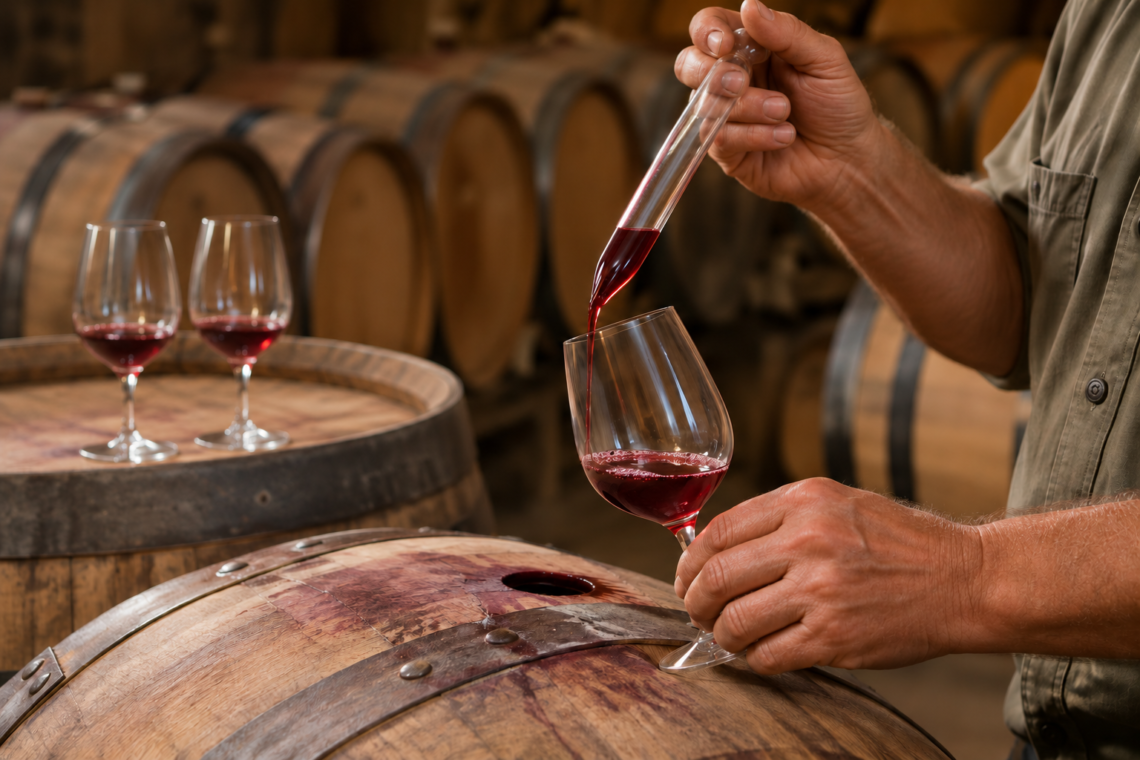
Samples will be drawn from selected barrels and served for a guided tasting. Before each wine, Clyde will introduce its grape variety, vintage, and aging history, explaining how it has developed and why it is being considered for bottling.
We’ll take time to look, smell, taste, and revisit the wines as they open in the glass. Conversation will focus on the qualities that help shape a bottling decision: fruit character, acidity, tannins, oak influence, texture, and how those elements work together. Guests will be encouraged to describe what they notice, ask questions, and compare impressions.
Where useful, samples may be tasted side by side to explore differences between barrels or potential blends. Even wines made from the same grape and vintage can develop differently, giving us a chance to discuss why a winemaker might keep a wine separate, combine it with another, or allow it more time.
These are working cellar samples. Some may be close to their intended form; others may still have decisions ahead of them. That is part of the interest: guests will encounter wine while the winemaker is still considering its future.
What the Winemaker Gains
Winemakers taste their wines repeatedly over months and years. That familiarity is essential, but hearing other people’s observations brings a fresh perspective to a wine. One guest may notice an aroma that starts a useful conversation; another may respond strongly to a particular texture or balance.
For Clyde, the tasting will offer an opportunity to listen as well as explain. How do guests experience the wines? Which qualities stand out? What do they enjoy, and what do they find puzzling? Their responses can help him understand how a wine communicates beyond the cellar.
The tasting will inform that conversation while leaving final bottling decisions with the winemaker. Readiness involves more than whether a wine is enjoyable in one glass, and Clyde will explain how tasting fits into the broader preparation for bottling.
What Wine Lovers Gain
For guests, the greatest benefit is access to the thinking behind the finished bottle. Terms such as “balance,” “structure,” and “barrel aging” become easier to understand when there is a wine in front of you and someone explaining what those words mean in that particular glass.
The tasting will also show why more time in barrel is a decision, rather than an automatic improvement. At Hiddencroft, where some wines spend years in oak, the question is always what that time is contributing and whether the wine has reached the point we have been waiting for.
No technical vocabulary or tasting experience is needed. Noticing that a wine feels drying, smells like cherries, or seems different after a few minutes in the glass is enough to begin. Learning comes from paying attention, comparing experiences, and asking questions—not from finding a single correct description.
A pre-bottling tasting offers a closer connection to wines you may later enjoy from the bottle. When you encounter them again, you will know something of their earlier character and the choices that helped shape them.
We look forward to sharing a few wines in progress, hearing your impressions, and opening a conversation about what happens before the cork goes in.

