Vineyard Management
Every vintage at Hiddencroft begins in the vineyard, where the rhythms of the seasons, the character of the land, and the unpredictability of Northern Virginia weather shape the grapes we grow. Across our historic farm, varieties such as Cabernet Franc, Petit Verdot, Tannat, Chambourcin, and Traminette present their own challenges and rewards. From winter pruning and spring budbreak to summer canopy management and autumn harvest, tending the vines requires patience, observation, and a willingness to adapt. Late frosts, summer droughts, relentless humidity, invasive pests, and the occasional generosity of Mother Nature all become part of each year's story. Here we share the triumphs and setbacks of growing wine grapes at Hiddencroft, the decisions we make along the way, and the lessons learned from working with the land rather than trying to command it.
-
Feathery Autumn Dance
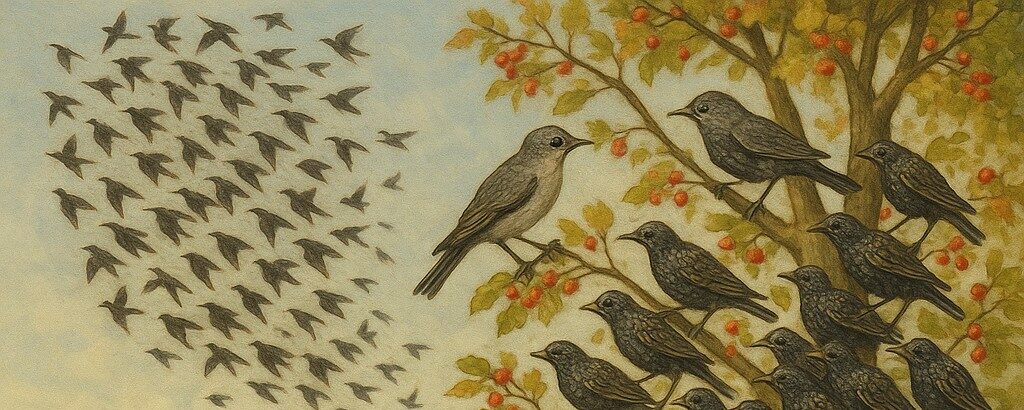
When the Grapes Are Gone: The Starling, Mockingbird, & Dogwood Ballet Every year, just after the final grape clusters are snipped from the vines and the vineyard begins to settle into autumn’s quiet hush, something extraordinary takes place. It’s not another harvest or a late-blooming flower. It’s an aerial ballet—a noisy, energetic, and oddly humorous performance starring hundreds of starlings, a few fiercely territorial mockingbirds, and a row of dogwood trees lining our vineyard fence. The Arrival of the Starlings Without warning, the sky darkens with movement. Starlings—dozens, sometimes hundreds—arrive like a gust of wind. They swoop in unison over the vineyard rows, swirling and diving with a kind of…
-
Why Pruning is Essential to Wine Quality
Key Decision Points When Pruning Grapevines When a person picks up a pair of pruning shears and begins to prune, several key decisions are made: Final Thought: The Art and Science of Pruning Pruning is both an art and a science—balancing vine health, fruit quality, and wine style. Experienced pruners develop an intuitive sense of how a vine should be shaped, ensuring it produces the best possible grapes for winemaking. Each cut is a decision that affects not just the current season but the vine’s future for years to come.
-
A Test of Patience and Perception
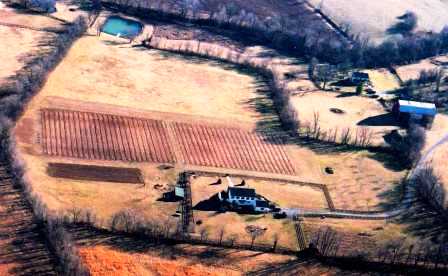
Spring of 2002, one year after planting the first part of the vineyard. Traminette and Chambourcin grapes were the first in the ground. The aerial photo was taken by a Robert Voll, in his private plane. Subsequent plantings took place in 2004 and 2008.