Wines
Wine is more than what fills a glass—it is the culmination of a growing season, the character of the grapes, the choices made in the cellar, and the patience required to let each wine find its voice. At Hiddencroft Vineyards, every wine has a story, from our familiar varietals and distinctive blends to our specialty wines, award winners, and library vintages. Explore the wines we've crafted over the years, the inspiration behind them, and the discoveries, traditions, and occasional surprises that make each one uniquely Hiddencroft.
-
Corsage – Amber Style Traminette
April 19, 2026 A Floral Whisper from the Ancient World Long before the hum of modern machinery and the gleam of stainless steel, there was clay, sun-warmed grapes, and the patient art of time. Back then, white wine grapes weren’t pressed and rushed away from their skin. Winemakers allowed them to linger together, mingling juice and tannin in earthy clay vessels buried beneath the soil. The result was a wine unlike the pale whites we know today: deep, amber-hued, and richly layered. Today, it is called orange wine. Or more poetically, amber wine or skin-contact white, a style as ancient as it is alluring. Our Expression: Corsage We didn’t bury Corsage in a Georgian qvevri,…
-
Petit Verdot 2016
April 18, 2026 From “Little Green” to Bold Virginia Beauty Estate Grown and Bottled at Hiddencroft Vineyards In the world of wine, Petit Verdot has long played the role of a supporting character—an aromatic and tannic splash in Bordeaux blends, added in small amounts for depth and structure. Its name, which translates from French as “Little Green,” reveals its biggest challenge in its native France: inconsistent ripening. Vintners in Bordeaux often found their grape clusters spotted with stubborn, unripe green berries. For centuries, it was a finicky grape—capable of greatness but only under ideal conditions. Here in Virginia, however, Petit Verdot finds its voice. Our vineyard’s climate and soils coax this once-temperamental…
-
Dutchman’s Creek Blend – Sixth Release
April 18, 2026 A Tribute to Time and Terrain Some wines tell a story. Dutchman’s Creek Blend tells several—of the land, the seasons, the grapes, and the people who helped shape it. This fifth release of our signature red blend brings together Cabernet Franc, Cabernet Sauvignon, Petit Verdot, and Tannat—bold varietals from three different vintages, blended into a seamless expression of structure, depth, and harmony. Richly layered with dark fruit, spice, and forest-floor complexity, this wine reflects not just expert craftsmanship, but a vineyard’s memory across time. Tasting Notes This is a wine with old-world bones and Virginia soul—made to complement bold, flavorful dishes or stand beautifully on its own. Origin & Craft Why We…
-
Serenity Blend 2020 –
April 19, 2026 From 2009 to 2012, three Loudoun winemakers came together to create Tranquility 321—a bold red blend that celebrated local fruit and creative collaboration. Clyde Housel was one of those three, alongside Jordan Harris of Tarara and Ben Renshaw of 8 Chains North. The name stood for: 3 winemakers, 2 grapes, 1 vineyard. Now, over a decade later, Serenity carries that spirit forward—with a twist. This time, it’s one winemaker, two vineyards, and the same bold pairing: Cabernet Sauvignon and Tannat. The result is both a tribute and an evolution—a wine grounded in Loudoun County history and grown from the soil that made Tranquility possible. Tasting Notes Serenity is a wine of depth and discipline—not…
-
The Day Chambourcin Answered the Question
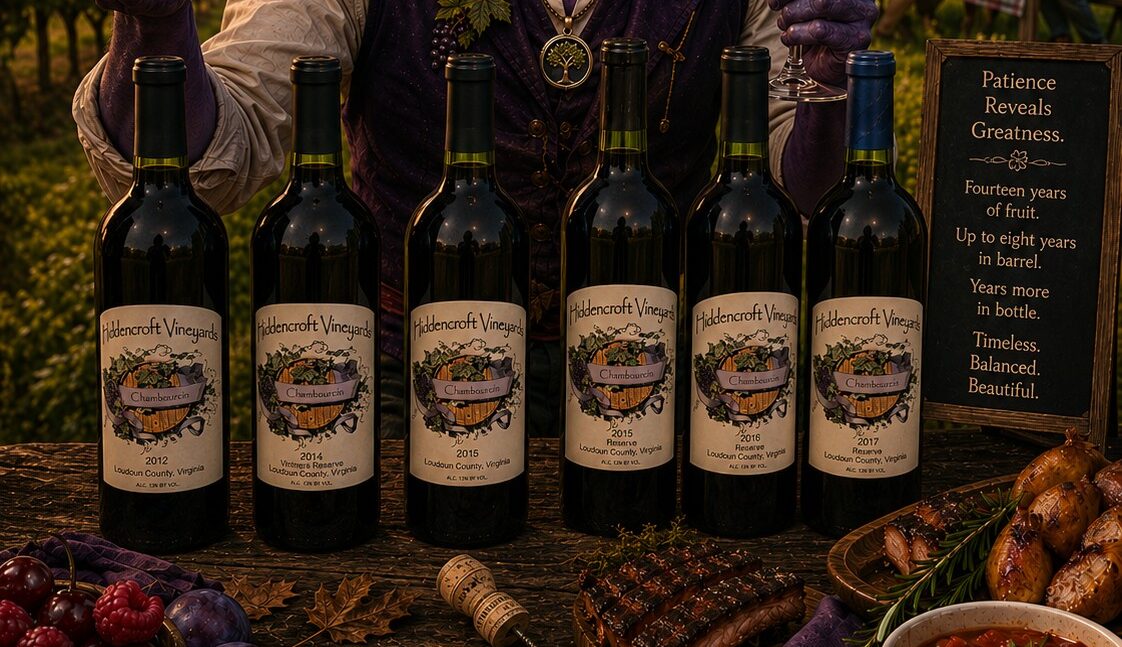
On a warm June afternoon in 2026, six bottles were placed on a tasting table at Hiddencroft Vineyards. There was nothing particularly unusual about the bottles themselves. No elaborate labels. No grand proclamations. No promises. Just six Chambourcin wines: 2012, 2014, 2015, 2015 Reserve, 2016, and 2017. The oldest fruit had been harvested fourteen years earlier. Each wine had spent between four and eight years in barrel before spending additional years in bottle. By modern standards, such treatment borders on neglect. Most wineries would have released the wines years earlier. Most consumers would assume that so much time would surely diminish them. But wine has a way of ignoring assumptions.…