-
The Patience of Oak
What Extended Barrel Aging Does to a Wine There is a quiet decision that happens in a cellar. Not during harvest. Not during fermentation. Later—when the wine is already made. It is the decision to wait. Most wines are guided toward release. Timed, shaped, and bottled within a predictable rhythm. But some wines resist that schedule. They ask for more time in barrel—not months, but years. And that decision changes everything. What It Means to Age a Wine Beyond the Expected Extended barrel aging—whether 18 months or stretching toward seven years—does not simply “improve” a wine. It transforms it. What begins as fruit becomes something else entirely. Structure shifts. Aromas…
-
Can Hybrid Grapes Produce Age-Worthy Wine?
For many wine enthusiasts, the phrase “age-worthy wine” immediately brings certain grapes to mind:Cabernet Sauvignon,Nebbiolo,Pinot Noir,Syrah,Bordeaux blends. Hybrid grapes rarely appear on that list. In fact, one of the most persistent assumptions in American wine culture is that hybrid wines are meant to be consumed young and cannot develop meaningful complexity with age. But assumptions in wine are not always reliable. And increasingly, some wineries are discovering that under the right conditions, certain hybrid grapes may evolve in surprisingly compelling ways over time. Why Hybrid Grapes Developed a Reputation for Early Drinking Part of the reputation comes from history. Many hybrid grape varieties were developed primarily for: Early hybrid wines…
-
The Day Chambourcin Answered the Question
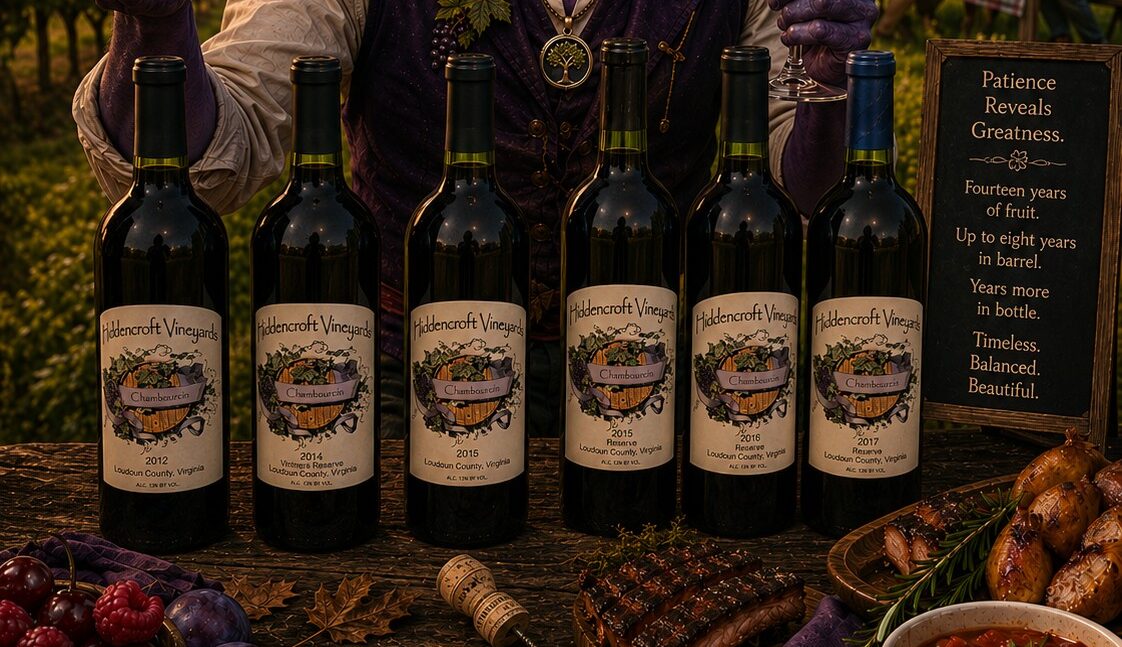
On a warm June afternoon in 2026, six bottles were placed on a tasting table at Hiddencroft Vineyards. There was nothing particularly unusual about the bottles themselves. No elaborate labels. No grand proclamations. No promises. Just six Chambourcin wines: 2012, 2014, 2015, 2015 Reserve, 2016, and 2017. The oldest fruit had been harvested fourteen years earlier. Each wine had spent between four and eight years in barrel before spending additional years in bottle. By modern standards, such treatment borders on neglect. Most wineries would have released the wines years earlier. Most consumers would assume that so much time would surely diminish them. But wine has a way of ignoring assumptions.…
-
The Morning the Vineyard Turned Black
A vineyard can change in a single night. After an unusually warm start to spring, the vines at Hiddencroft Vineyards had already awakened when temperatures plunged to 25 degrees on April 20–21, 2026. What followed was not a light frost, but a hard regional freeze that blackened tender shoots across the vineyard. This essay explores the difference between frost and freeze, how grapevines recover, and what a devastating spring freeze teaches about resilience, adaptation, and the quiet importance of a well-stocked cellar.
-
A Challenging Start to the 2026 Growing Season
Every vineyard season tells a different story, and 2026 is shaping up to be one of the more challenging growing seasons we have experienced since planting our first vines in 2001. A combination of factors has affected vineyards throughout our region, and Hiddencroft has not been immune. Last season, our vines endured unusually heavy pressure from Spotted Lantern Flies. While the insects rarely kill established grapevines outright, large populations can weaken vines by feeding on their sap late into the growing season. Many of our vines entered winter under greater stress than normal. Winter then delivered another challenge. Several periods of exceptionally cold temperatures caused more vine injury and vine…